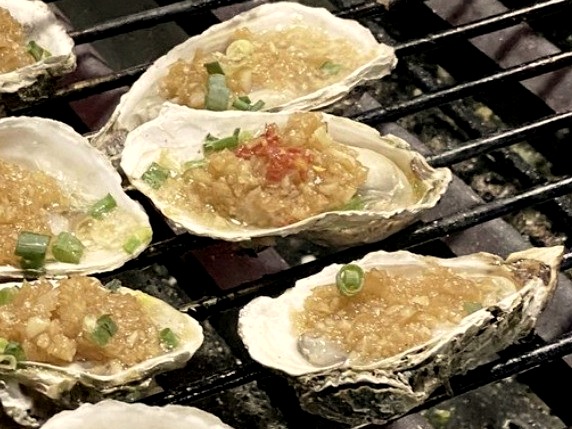
Charcoal-grilled oysters (photographed on site, collected October 2026)
In the winter of 1099, Su Dongpo received a gift in Hainan: someone sent him a basket of oysters. He worked out two ways to cook them, then wrote this passage in a letter to his youngest son, Su Guo:
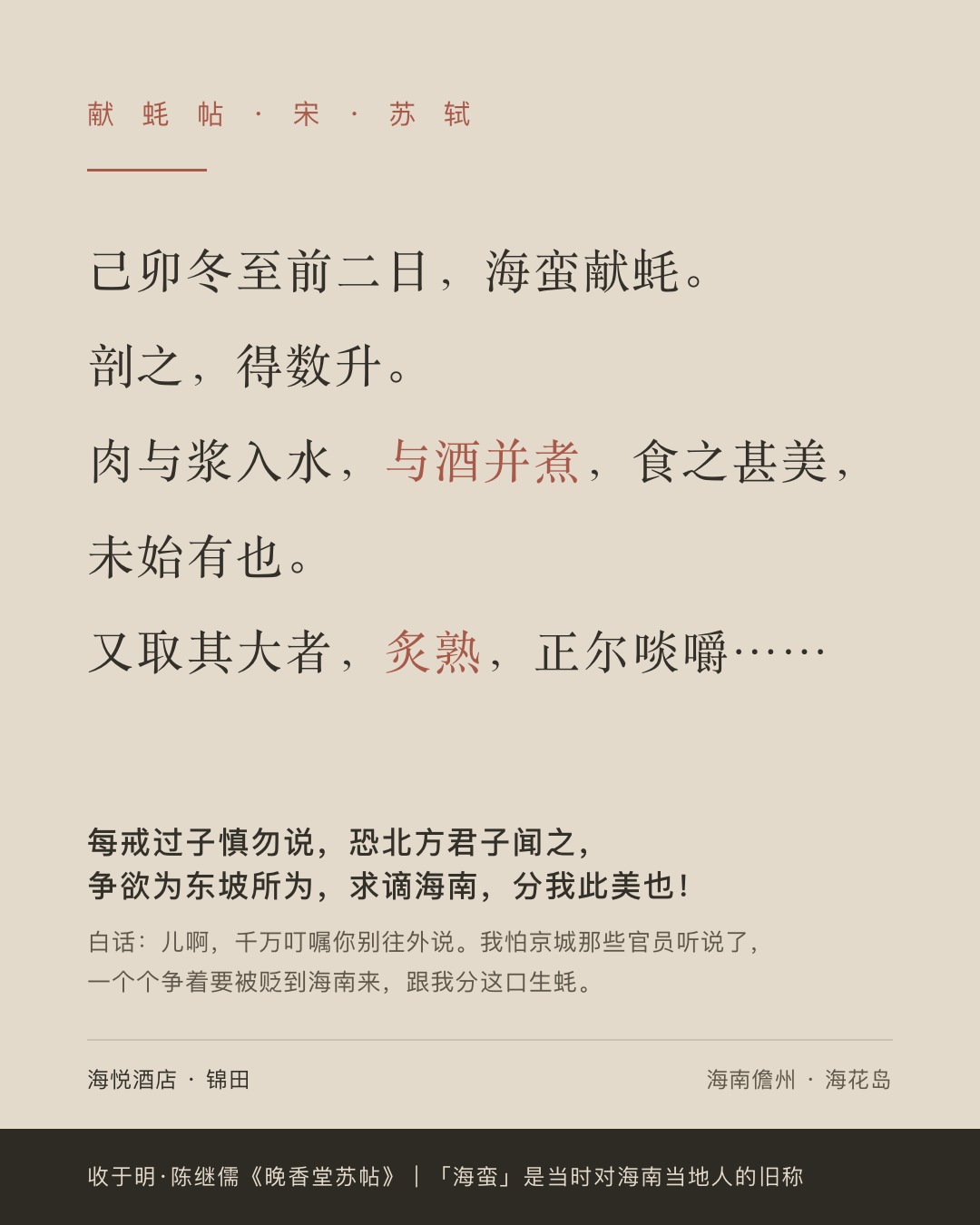
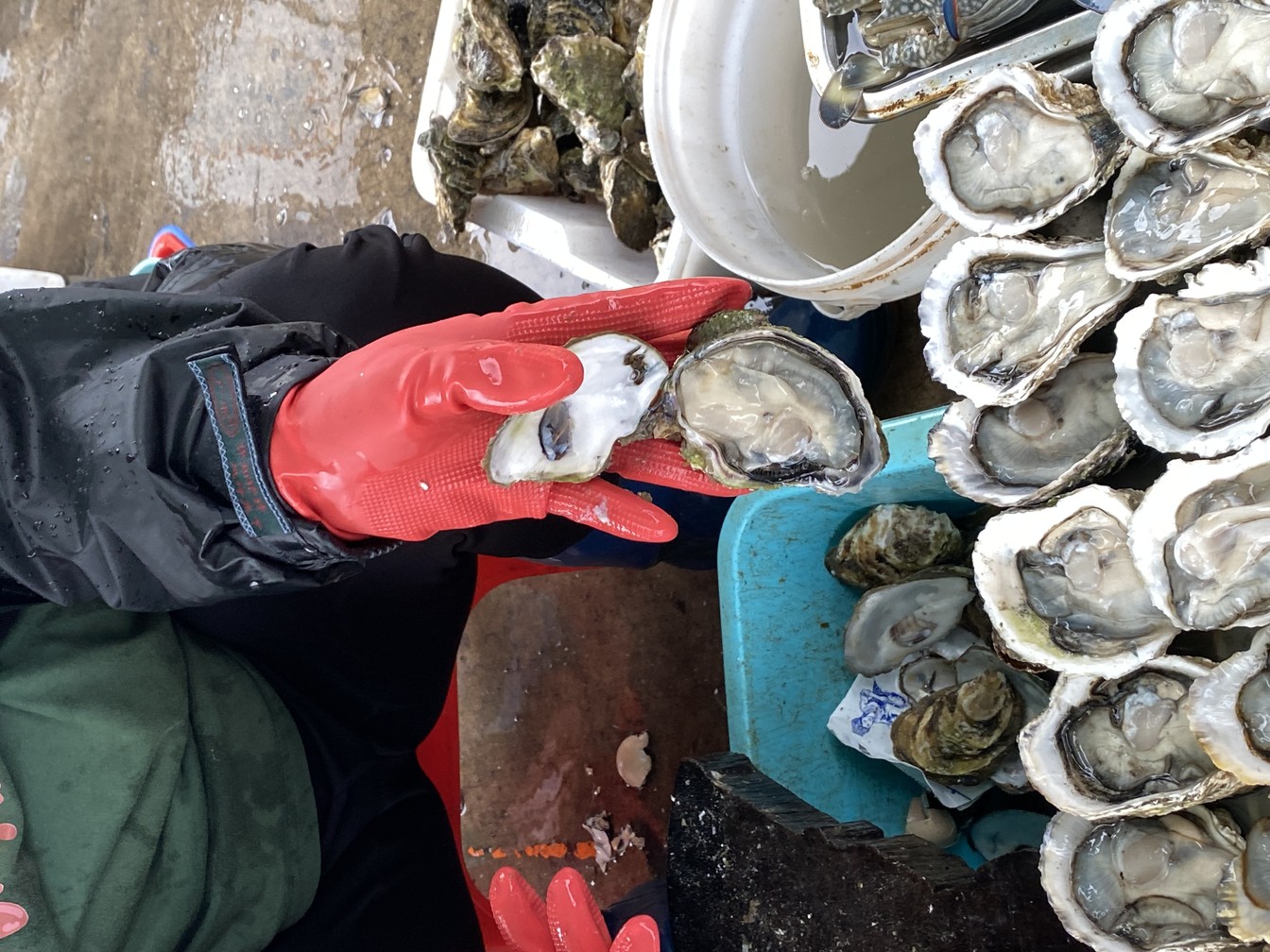
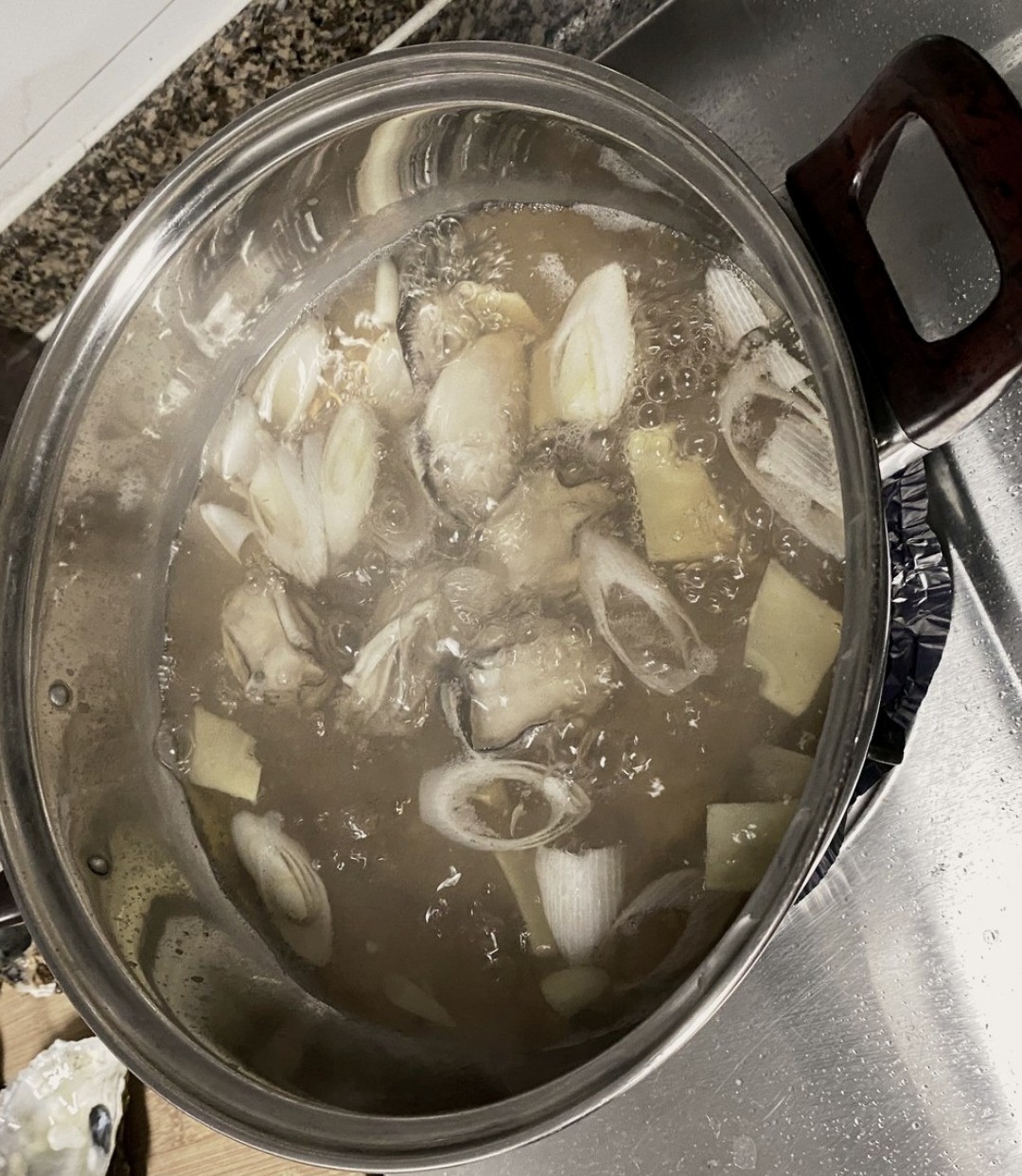
Two days before the winter solstice of the jimao year, the sea folk presented oysters. We split them open and got several pints. Flesh and liquor went into water and were boiled together with wine — eaten thus, they are most delicious, unlike anything before. Then we took the larger ones, roasted them, and chewed them just as they came...
Up to here it's an ordinary food note. The next line is the point:
I keep warning Guo'er: on no account tell anyone. I fear the gentlemen of the north will hear of it and vie to do as Dongpo has done, asking to be banished to Hainan so they can share this delicacy of mine!
In plain words: my son, I beg you not to tell anyone. I fear the officials in the capital will hear of it and, one after another, compete to be banished to Hainan, just to share these oysters with me. A sixty-two-year-old man, exiled to a place then second only to the death penalty, discovered something delicious — and his first thought was the fear that others would come and take it.
One oyster, two ways
He wrote out his method in detail, two ways: the small ones, flesh and juice together, into the pot with wine to boil; the large ones, straight onto the fire to roast. He compared them himself and found the roasted ones better.
This record was later carved into a calligraphy album — the "Ode to Oysters." The Hainan Provincial People's Government website notes that it is included in the Ming scholar Chen Jiru's "Model Calligraphy of Su from the Wanxiang Hall," a work that "brings together fine food, calligraphy and beautiful prose." In other words, this "oyster recipe" survived only because people copied it out as calligraphy for over a thousand years. A delicacy he feared would be discovered ended up as a piece of calligraphy.
He meant it
Some might think it's just a joke. But there's supporting evidence. More than four hundred years later, Lu Shusheng of the late Ming recorded the same story in his "Notes Written in the Summer Heat," in even plainer terms:
Dongpo, in Hainan, found the oysters delicious and wrote to Shudang: do not let the officials and literati of the court know, lest they vie to be moved south and share this flavor.
"Do not let the officials and literati of the court know" — don't let those at court find out. And there's even harder evidence: Su Dongpo wrote a great deal about food in his life. He praised pufferfish, bamboo shoots and artemisia; he studied pork in Huangzhou; he ate lychees in Huizhou. But he never wrote a single poem about oysters — not one. So this "secrecy" was something he took seriously.
Today's Danzhou has more to offer
Oysters are of course still here. Danzhou has a long coastline, so seafood is never a worry. But here are a few things he probably never got to try:
- Guangcun sandworms: a geographical-indication specialty of Danzhou, locally nicknamed "marine cordyceps" — crisp in texture with a direct, clean umami.
- Xinying dried red fish: red fish sun-dried into a salty, fragrant staple, perfect for claypot rice.
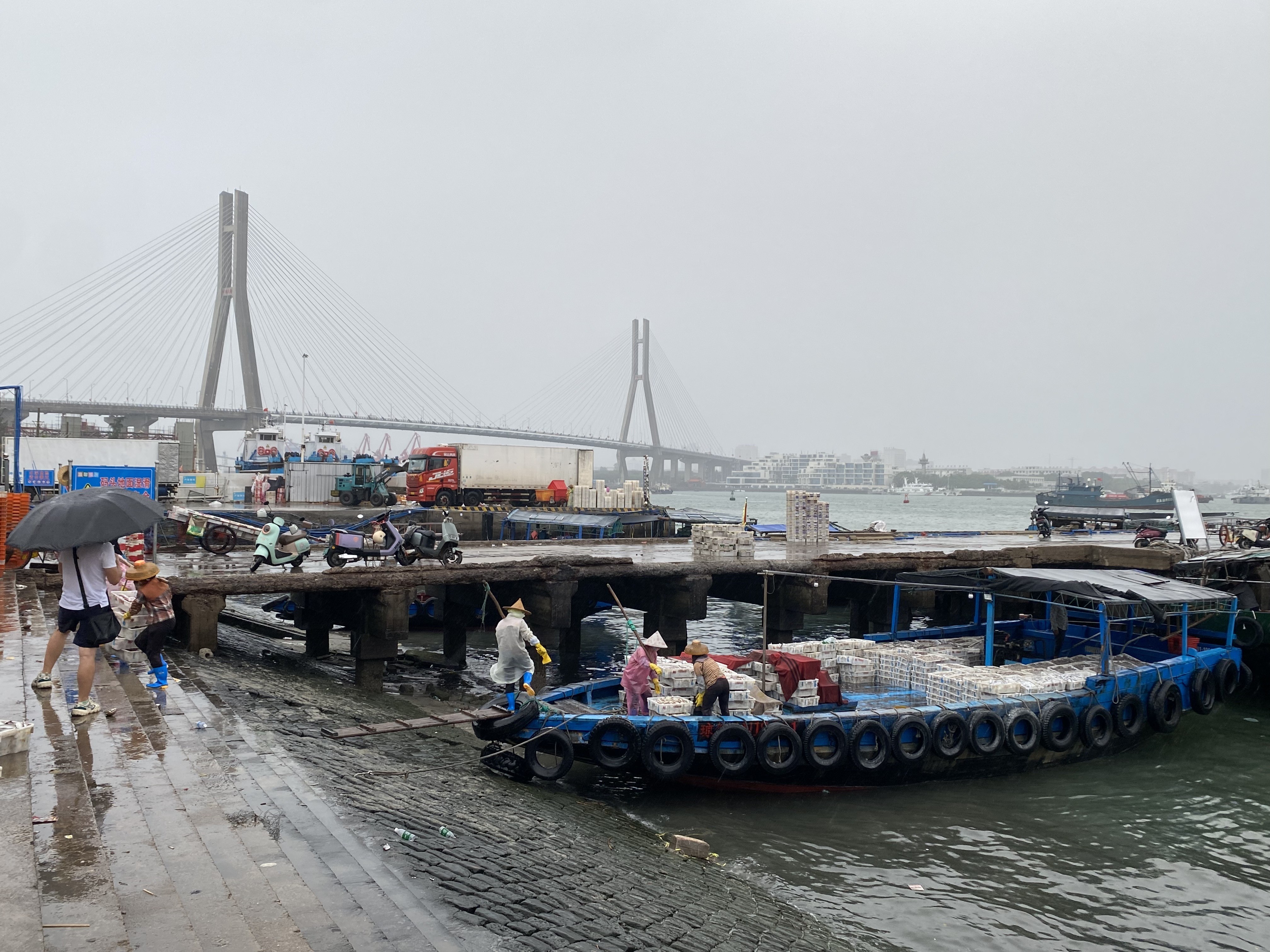
- Baimajing seafood: Nansi Pier is liveliest every morning, as fishing boats dock and the catch is weighed and traded right on the shore. (Prices vary with season and catch; ask about the day's market before you go.)
A banished man, spending his time on the island, devoted a good part of it to "figuring out what here is edible."
Su Dongpo stayed in Hainan for more than three years. He dug a well, founded a school, and taught Hainan's first juren. But he also put plenty of thought into food: he worked out two ways to cook oysters, noted how to simmer shepherd's purse into a soup, named a wild fruit, and wrote to his son urging secrecy. Three years later he crossed the sea back north, and aboard the boat wrote: "Nine deaths in the southern wilds — I bear no grudge; this journey, wondrous beyond compare, crowns my life." A place that nearly killed him he called the most extraordinary experience of his life. Perhaps that mouthful of oyster was part of it, too.
Hainan Danzhou · Haihua Island
Tel 0898-23509960